You want to write a short story. You have a mug of tea going cold, an afternoon, and no idea at all. That is not a failure of imagination. It is the ordinary starting position, and most writers you admire have been standing in it this week.
The mistake is waiting for an idea to turn up fully formed. It rarely does. What turns up is something much smaller — a voice, a room, a line of dialogue overheard on a bus. The story gets built afterwards, sentence by sentence, out of whatever is lying around.
A plan is a lot to ask of a cold morning. A line is not. The first sentence of a short story has one job: to make the second sentence possible. It does not need to be beautiful. It needs to open a door.
Try writing a line that implies something has just happened, or is about to. Present tense often helps, because it puts the reader in the room. So does a concrete object — keys, a coat, a receipt, a dog.
Write ten of your own in five minutes. Don't judge them. When one gives you a small tug — a question you want answered, an image you can see — keep it and write the next three sentences. That is how a story starts: with a curiosity you cannot quite shake, rather than a plan.
Freewriting is the most useful tool a beginner has, and the most commonly abandoned, because people expect it to produce prose. It won't. It produces compost.
Set a timer for ten minutes, then follow four rules:
A springboard phrase makes this easier than a blank page. Write one at the top and answer it: What I actually remember is… Or: The thing nobody says about my family is… Or simply: I was wrong about…
Most of what you write will be dull. That is fine. You are not looking for a whole story; you are looking for one sentence that surprises you. Read back with a pen and underline anything with heat in it — a name, an odd detail, a phrase that sounds like someone speaking. Copy that sentence to a fresh page and write on from there.
If a line gives you a person, the story usually follows. Characters are not built from biographies; they are built from wants and evasions. What someone wants in the next hour tells you more than a page of history.
Answer these in a few sentences each, in the character's own voice if you can. Then put them in a room with someone who wants something different. That is a scene, and a scene is all a short story needs to begin.
New writers often assume a short story needs a twist, a tragedy or a revelation. It needs a change. Something is different at the end than it was at the start, and the reader can feel it.
The simplest shape is this: someone wants something, something gets in the way, and they end up slightly altered. The stakes can be tiny. A returned jumper. A missed train. A phone call at eleven at night that nobody answers. Small stakes handled honestly are far more affecting than large ones handled vaguely.
Before you write, fill in three lines:
If you can answer those, you have enough to draft. If you cannot answer the second, that is your real problem. Find the thing that forced today rather than any other day, and the story will start moving.
The draft you write today is not the story. It is the clay. Trying to make it good while writing it is the surest way to stop writing it, because the part of you that judges and the part that invents cannot work at the same time.
So give yourself permission: no going back, no fixing, no rereading the whole thing at the end of the session. If you get stuck, write [something happens here] in brackets and skip forward to the next bit you can see. You can repair it tomorrow, when you know what the story is actually about.
Here is a routine you can run today, with no preparation at all:
Then close the document and leave yourself one note: the single thing you are most curious about. That note is your idea. You had it all along — you simply needed to write your way towards it.
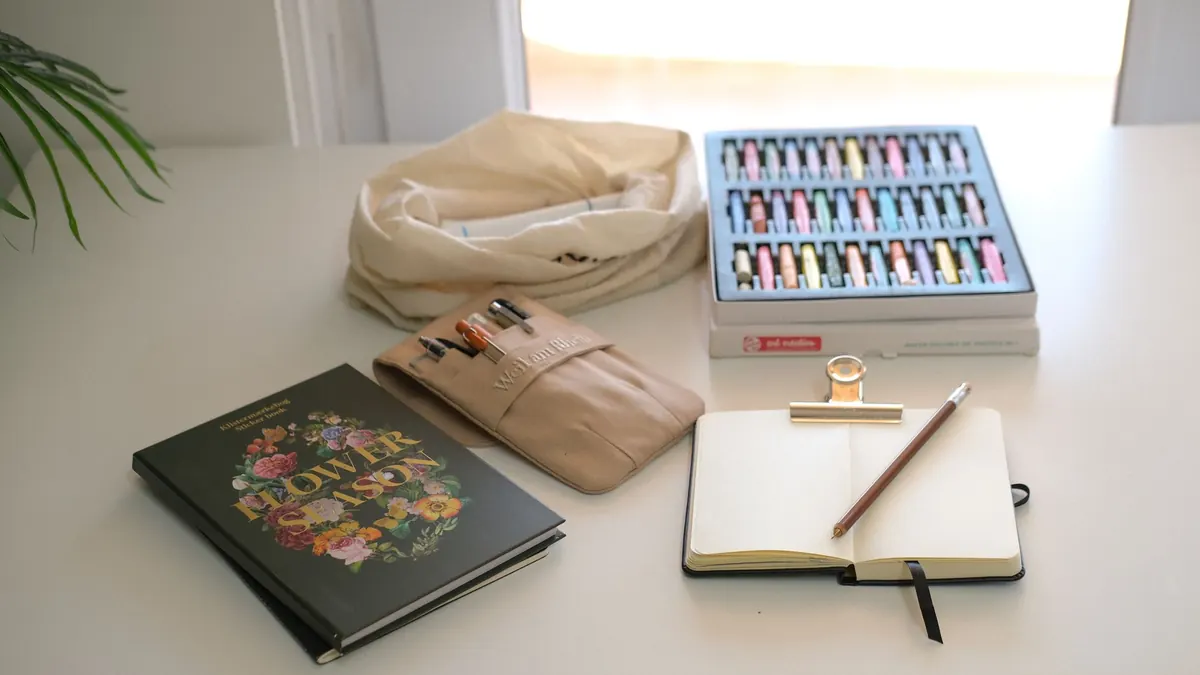
Photo: AymaneJed / Pixabay